
Dave: Credit, Cash & Money App
Dave Operating LLCFinance
4.7235.40K Reviews
- Version
- 4.15.0
- Installs
- 10.00M
- Age Rating
- Everyone
Screenshots
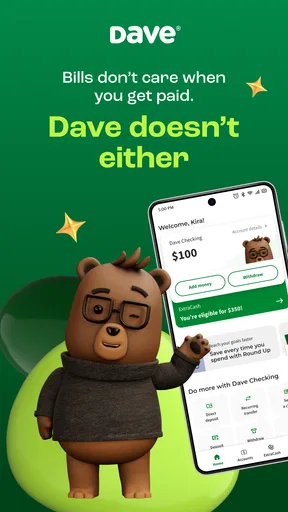

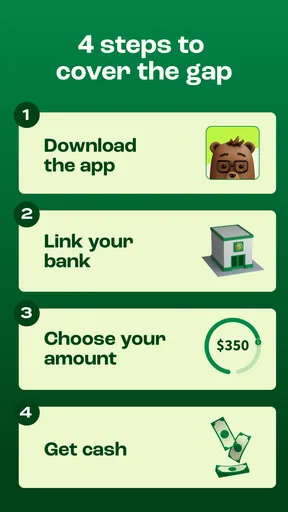
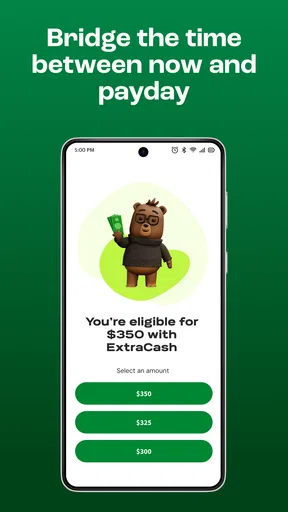
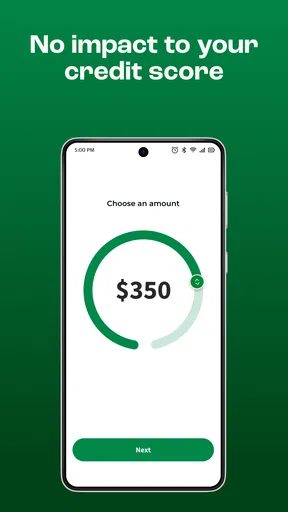
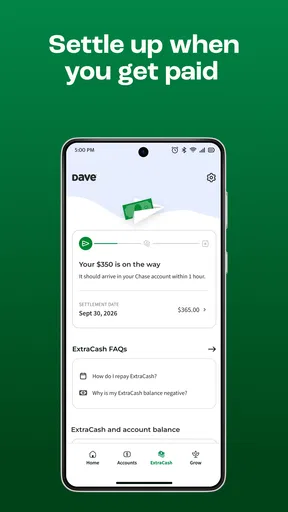
Our Review of Dave: Credit, Cash & Money App
 Analysis by Appyee
When my balance is low and payday is still several days away, I want a practical answer rather than another complicated budgeting lesson. That is where Dave: Credit, Cash & Money App fits. It is a finance app from Dave Operating LLC built around short-term access to cash, with a simple starting point for people who need to bridge a temporary gap. I found the experience more useful when treated as an emergency cash-flow tool than as a complete replacement for a bank account or a long-term money plan.
The basic appeal is easy to understand: the app is free to download, carries an Everyone age rating, and its store summary presents access to as much as 500 before payday without a credit check or interest. That sounds reassuring, but the important question is not simply whether cash is available. The real question is whether the timing, repayment, account connection, and overall cost fit your situation. My experience is that Dave makes the request process approachable, while the surrounding details deserve careful attention before accepting anything.
From a tight balance to a workable plan
I look at the shift from an urgent shortfall to a workable plan as the key decision point: a quick advance helps only when I can name the expense and see how repayment fits around what comes next. Before moving ahead, I’d map the next deposit against essential bills, so the solution does not quietly create a second cash crunch. That practical check also sets up a closer look at how the app’s pace feels during everyday use.
Starting with the actual problem
A realistic use case is a bill arriving just before a regular paycheck. Perhaps a utility payment, a prescription, or an essential grocery trip has to happen now, while the money needed to cover it is already expected later. In that situation, I would open Dave with one specific purpose in mind: identify the shortfall, check the repayment timing, and decide whether borrowing a smaller amount solves the problem without creating another one.
That last part matters. An advance can make today easier while leaving the next payday unusually tight. I would not use the app to fund recurring entertainment, cover a permanent income gap, or keep several unrelated expenses afloat. For those situations, changing the budget, contacting the bill provider, or choosing a conventional bank product may be more sustainable. Dave is most convincing when the need is temporary and the repayment path is already visible.
The app’s scale gives it a familiar feel for many people. It has a 4.7 average from around 620,000 ratings, and the service has passed 10 million installs. Those figures suggest that the product is not an obscure experiment, but popularity should not replace a personal affordability check. A large user base cannot tell me whether my next deposit is reliable or whether a particular advance makes sense for my own bills.
Setting up the route to eligibility
The first practical stage is connecting the financial information Dave needs to evaluate the request. This is the point where I would slow down instead of tapping through automatically. I want to know which account will be used, whether the income pattern shown there is current, and whether the expected repayment date matches reality. A stale account or an irregular deposit can make the app less useful even when the financial need is genuine.
This handoff between the app and my everyday banking is central to the whole workflow. Dave is not operating in isolation: it needs a view of the money coming in and the account from which repayment will be handled. That makes the service convenient, but it also means that account accuracy and privacy deserve the same attention I would give any finance app. I would review every confirmation screen and avoid treating a fast approval path as permission to skip the terms.
One useful habit is to prepare before opening the request. I would check the current balance, list the next unavoidable payments, and estimate what will remain after the next deposit. This turns Dave from a tempting “how much can I get?” screen into a decision tool. The strongest amount is not the maximum displayed; it is the smallest amount that handles the immediate expense while leaving room for ordinary spending and scheduled bills.
Reviewing the offer instead of chasing the maximum
The store summary emphasizes no credit check and no interest, which makes the product different from many traditional borrowing options. Even so, I would read the complete offer and any applicable service choices before confirming. “No interest” does not automatically mean that every route is free in every circumstance, and a faster delivery option or optional service can affect the total experience. The key is to distinguish the amount received from the amount and timing involved in getting it.
I would also treat the stated upper limit as a ceiling rather than a promise. A person’s available amount can depend on the account information and the app’s assessment, so planning around the largest figure would be risky. Dave works better when I decide what I need first and then see whether the app can cover that specific gap. If the result is smaller than the bill, I would rather reassess the expense than stack another borrowing source on top.
This is one of the less obvious trade-offs: speed can reduce the time available for reflection. A conventional loan application may feel slow and inconvenient, but that delay sometimes forces a more deliberate comparison. Dave removes much of that friction, which is helpful during a genuine timing emergency, yet it also makes self-discipline more important. I would pause long enough to write down the repayment date and the bills competing with it.
Following the handoff to repayment
Once the request is accepted, the workflow moves from selecting an amount to managing the arrival and later withdrawal. I would keep the linked account funded for the scheduled repayment rather than assuming the next deposit can absorb everything. This is especially important if my income changes, arrives late, or is divided between accounts. The app can simplify the transfer, but it cannot make an unstable cash-flow pattern stable.
For an everyday example, imagine that I need money for a necessary purchase on a Tuesday and expect my paycheck at the end of the week. I would request only the amount needed for that purchase, confirm how the repayment aligns with the paycheck, and leave enough in the account for food, transport, and automatic bills. After the money arrives, I would avoid spending the remaining balance as if it were extra income. The outcome is successful only if the next week remains manageable.
This is also where notifications and account monitoring become practical rather than decorative. I would check the app after the transfer, verify that the expected amount reached the intended account, and revisit the repayment details before payday. If the balance changes unexpectedly or the deposit is delayed, I would address the issue early rather than waiting until the scheduled date. The best workflow includes a backup plan, such as contacting the relevant biller or reducing discretionary spending.
What the result feels like in practice
When the timing is right, Dave’s main strength is clarity. The app is aimed at a narrow problem and does not require me to compare a long list of conventional credit products before dealing with a short-term need. The free entry point and straightforward cash-advance focus make it approachable for someone who may feel overwhelmed by formal lending applications.
It is also more useful for an irregular surprise than for a planned purchase. If my car needs an essential repair and I know exactly when my income arrives, a small advance may prevent a late bill or an expensive interruption. If I am saving for a holiday, replacing a nonessential device, or repeatedly borrowing to reach the end of every pay cycle, the same convenience becomes a warning sign.
The result should therefore be measured in cash-flow stability, not just speed. Did the advance solve the immediate problem? Did repayment leave enough for necessities? Did I avoid needing another advance immediately afterward? Those questions tell me more than the approval itself. A fast transfer that causes a second shortfall is not a successful financial outcome.
Where the flow breaks down
The first weakness is that Dave cannot remove uncertainty from a person’s income. If deposits are inconsistent, the linked account is not the one I regularly use, or upcoming obligations are already too large, the app may not fit the situation. This is not a criticism of the interface so much as a limit of short-term borrowing: it moves money across time, but it does not create new income.
The second friction point is the need to understand the handoffs. Money may move between the app and a connected account, and the user remains responsible for knowing which account receives funds and which account handles repayment. I would not rely on memory. I would keep the confirmation details available, check the bank balance, and make sure the account is not emptied by unrelated automatic payments before the repayment date.
A third concern is behavioral. The app’s convenience can make repeated advances feel normal. If I needed Dave several times in a row, I would stop and examine the underlying budget instead of treating each request as an independent fix. A spreadsheet, a bank budgeting tool, or a conversation with creditors might be more valuable at that stage. Dave is a bridge; it should not become the road.
There is also a comparison issue. A traditional credit card may offer a larger spending window, but it can introduce interest and revolving debt if the balance is not cleared. A bank overdraft may already be integrated with an existing account, though its terms can be less attractive. A personal loan may suit a larger, clearly defined expense, but it usually involves more formal assessment and a longer commitment. Dave sits between these choices: faster and more focused than a conventional loan, but less suitable for substantial or ongoing borrowing.
Who should use it, and who should skip it?
I would recommend trying Dave to someone with a short, identifiable gap, dependable incoming money, and the discipline to request only what is needed. It can be particularly helpful when a necessary expense cannot wait for payday and a credit check would be an obstacle. The free price also lowers the barrier to exploring the service, although I would still inspect the final terms and delivery choices before proceeding.
I would tell someone to skip it if their income is already insufficient for regular bills, if they are trying to combine several debts, or if repayment would force them to borrow again. It is also a poor match for anyone uncomfortable connecting financial accounts or tracking a scheduled withdrawal. In those cases, a nonprofit debt adviser, a direct payment arrangement with the bill provider, or a more structured banking solution may offer better long-term protection.
The app is available for a broad audience, with an Everyone content rating, but age suitability does not equal financial suitability. A person can be old enough to use the app and still be in a situation where an advance is unwise. I would judge it by income reliability, upcoming commitments, and the reason for borrowing rather than by the ease of signing up.
What I would check before pressing confirm
I would use a short personal checklist. First, I would write the exact expense and request no more than that amount. Second, I would identify the next expected deposit and subtract rent, utilities, food, transport, and automatic payments. Third, I would confirm the linked account and the repayment timing. Finally, I would consider what happens if the deposit arrives late. If that last answer is “I would immediately need another advance,” I would not proceed.
I would also compare the alternative cost of waiting. Could the bill be moved by a few days? Could I pay part of it now? Is there an existing emergency fund, or would a trusted person help without creating a formal obligation? Dave may be the cleanest option in one situation and the wrong option in another. The app is most valuable when it is one carefully chosen tool, not the first response to every financial surprise.
My overall view after following the complete workflow
Dave Operating LLC has made a focused finance app for a very specific moment: the space between an urgent expense and an expected paycheck. Its free access, no-credit-check positioning, and emphasis on quick cash give it a clear identity, while its 10 million-plus installs show how widely that identity has reached. The current version is 4.9.1 and supports operating systems from version 9 onward, so compatibility is worth checking before installation.
I like the app most when I imagine using it with a written plan beside me. I know the amount, I know why I need it, I know where the money is coming from, and I know what repayment will do to the next week. Under those conditions, it can be a convenient bridge and a less intimidating alternative to conventional borrowing.
I would not present it as a universal answer to money problems. The important work happens around the app: checking the account handoff, reading the offer, protecting the repayment balance, and recognizing when a temporary shortfall has become a recurring pattern. My recommendation is simple: use Dave for a defined, short-term gap only when the way back to a balanced account is already clear.
Privacy and Permissions
See what permissions an app requests and how it handles your data.
- Location
- approximate location (network-based), precise location (GPS and network-based)
- Phone
- read phone status and identity
- Photos/Media/Files
- read the contents of your USB storage, modify or delete the contents of your USB storage
- Storage
- read the contents of your USB storage, modify or delete the contents of your USB storage
- Camera
- take pictures and videos
- Microphone
- record audio
- Wi-Fi connection information
- view Wi-Fi connections
- Device ID & call information
- read phone status and identity
- Other
- view network connections, pair with Bluetooth devices, send sticky broadcast, change network connectivity, full network access, change your audio settings, control Near Field Communication, run at startup, draw over other apps, control vibration, prevent device from sleeping, Google Play license check
Verdict
Strengths of Dave: Credit, Cash & Money App
- Fast access to credit-building tools and cash advance options.
- Clear repayment schedules help users plan upcoming payments.
- Useful spending insights make it easier to monitor personal finances.
- Automatic payment features can help avoid missed due dates.
- Available on mobile for convenient account management anywhere.
Limitations of Dave: Credit, Cash & Money App
- Eligibility and advance limits may vary significantly between users.
- Some features may require a paid membership or recurring fee.
- Cash advances can include expedited transfer or other service fees.
- Late repayment may affect access to future advances.
- Not available in every region or for all banking situations.
Similar Picks in This Category
View All
Google Wallet
Google LLC4.3

Airtel: Recharge, Bank & Loans
Airtel4.0

PayPal - Pay, Send, Save
PayPal Mobile4.2

DANA Indonesia Digital Wallet
PT Espay Debit Indonesia Koe4.5

Binance: Buy Bitcoin & Crypto
Binance Inc.4.8

Cash App
Block, Inc.4.7
Frequently Asked Questions
What is Dave: Credit, Cash & Money, and how does it work?
Dave is a personal finance app designed to help users manage everyday money needs. Depending on eligibility, it may provide access to ExtraCash advances, budgeting tools, spending insights, a checking-style account, and other financial features. After creating an account, you connect or use the available banking services, review the terms shown in the app, and request only the features you qualify for.
Can Dave give me cash before payday, and are there any fees?
Dave may offer eligible users an ExtraCash advance before their next paycheck, but approval, limits, repayment dates, and availability can vary. The app clearly presents applicable costs before you confirm a transaction. Users should carefully review optional express-transfer charges, membership costs, and any other disclosed fees, because the total expense depends on the selected delivery method and account terms.
Does using Dave affect my credit score or require a credit check?
Dave’s cash-advance feature is generally designed differently from a traditional personal loan and may not rely on a conventional hard credit inquiry. However, eligibility can involve account information, income patterns, banking activity, and other checks. Policies and reporting practices may change, so read the current disclosures in the app and do not assume every Dave product has identical credit-related consequences.
Is Dave safe to use, and what information does it require?
Dave uses account credentials, personal details, and financial information to verify identity, assess eligibility, provide account services, and process transactions. As with any financial application, users should download it only from the official Google Play Store or Apple App Store, enable device security, use a strong unique password, and review permissions and privacy disclosures before linking a bank account or authorizing access.
What happens if I cannot repay a Dave advance on time?
Repayment is normally scheduled from the connected bank account on the date displayed when the advance is accepted. If your balance is insufficient, the payment may be retried or your access to future advances may be affected, depending on the current terms. Contact Dave support promptly if you anticipate a problem, and review all repayment conditions rather than treating an advance as guaranteed income.
